“We want something eco-friendly, not too expensive, and it has to look good with our logo.” We hear that brief constantly — usually from a brand that has not yet worked out the difference between jute, cotton canvas, non-woven PP and woven PP. This guide compares the four workhorses of the eco-tote world so you can brief us (or any factory) with confidence.
Start With the Use Case, Not the Fabric
Every eco bag program is really an answer to one question: what will the person carrying it do? A grocery chain, a festival organizer and a premium fashion boutique want completely different bags. Before comparing fabrics, answer these:
- Carry load — light retail purchases or 8–10 kg of groceries?
- Lifespan — a single event, a season, or years of daily use?
- Brand feel — artisanal and natural, clean and premium, or bright and promotional?
- Print job — a two-color logo, a photo gradient, or no print at all?
- Budget and volume — a few hundred or hundreds of thousands of units?
Jute: The Natural-Fibre Brand Statement
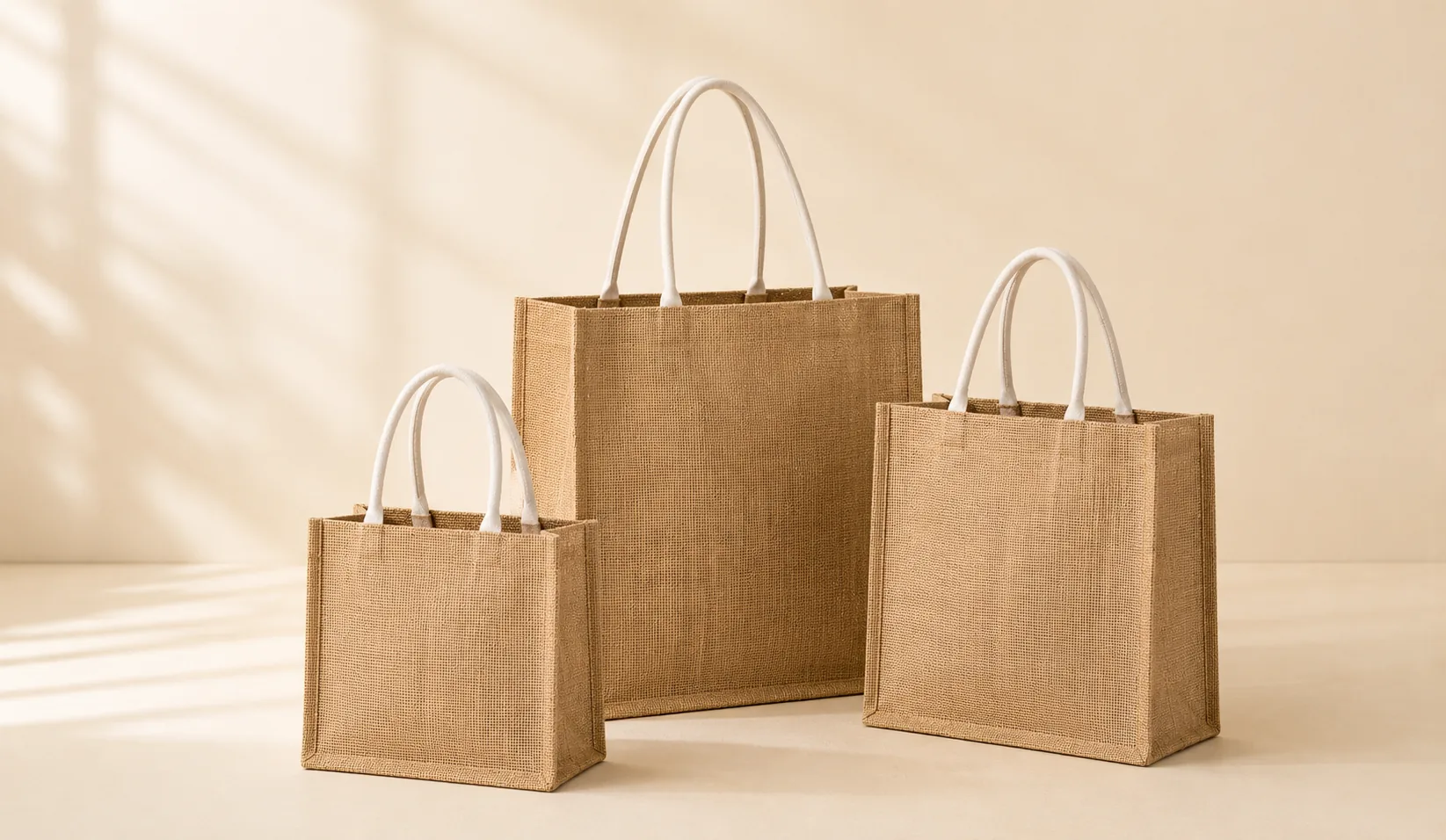
Jute shopping bags are woven from bast fibre in natural or bleached shades, typically 250–290 gsm. The loose weave reads instantly as “eco,” which makes jute the default choice for organic grocers, farm shops and brands telling a natural story.
- Clean two-to-four-color screen prints; jacquard logos at large volume
- Cotton webbing or twisted jute handles with a 60–70 cm drop
- Breathable and compostable, but not for wet or powder-fine contents
- Standard 38x43 cm totes with gussets; MOQ 500 pcs per style
Cotton Canvas: The Premium Everyday Carrier
Heavyweight canvas totes use 100% cotton canvas from 8 to 12 oz. Canvas holds its shape, washes well and accepts the widest range of decoration — screen print, heat transfer, DTG and embroidery all work. That makes it the safest pick when the bag is a product in itself, not just packaging.
- Boxed-bottom totes, shopper silhouettes and zipper-top styles
- Twin-needle cotton webbing handles with bar-tacks
- Sharp full-color prints and photo graphics on a flat surface
- MOQ 500 pcs; ideal for retail, corporate merch and events
Non-Woven PP: The Promotion Workhorse
Non-woven reusable bags are spunbond polypropylene in 80, 90 or 100 gsm — the classic folded trade-show and grocery giveaway. They print bright and fast, pack flat for cheap freight and hit promotional price points at volume.
- Screen print up to six colors on both sides; heat transfer for gradients
- Die-cut, U-cut or loop handles with sonic-bonded hems
- Load-tested to 8–10 kg depending on gsm and pattern
- MOQ 1,000 pcs; standard 30x40x10 cm shoppers
Woven PP: Heavy-Duty and Laminated Options
Woven PP bags and sacks are the industrial cousins: flat or tape yarn woven at 55–110 gsm, available plain or BOPP-laminated for a printable, moisture-resistant surface. They suit harvest and wholesale programs, pet food and bulk goods that need real tear strength.
- Flexo printing up to six colors, inside or outside the lamination
- Open-mouth sacks, valve bags and printed totes
- Hemmed tops, sewn bottoms, optional lining
- MOQ 1,000 pcs; the most cost-effective carry per kilogram
Decision shortcut: canvas when the bag is the product, jute when the brand story is natural, non-woven PP when volume and price win, woven PP when the load and abuse are serious.
Weight, Print and Price at a Glance
- Jute — 250–290 gsm; crisp simple prints; mid price
- Canvas — 8–12 oz; best full-color print surface; highest price of the four
- Non-woven PP — 80–100 gsm; bright screen colors; lowest price at volume
- Woven PP — 55–110 gsm plus lamination; strong flexo; best price per kilogram carried
Certifications to Ask For
Eco claims need receipts. Ask for OEKO-TEX Standard 100 or REACH/RoHS declarations when the bag touches skin or food-adjacent goods, and if you market recycled content, request GRS transaction certificates so the claim survives retail compliance. Our factory supports all of these — see the certifications page for details.
What to Send a Factory
- Use case, carry weight and expected lifetime
- Brand feel: natural, premium, or promotional
- Print: number of colors, placement and whether it includes photos
- Target unit price and program volume
That is enough for our material team to shortlist two or three options with swatches and a cost range — before any pattern work starts.